
Bike Safety

Don't Forget Your HelmetAlways ride with a properly fitted helmet.Did you know? Helmets reduce head injury by 48% and serious head injury by 60% (NLM). A properly fitted bike helmet should cover your forehead and fit securely on your head — it shouldn't move around, but shouldn't be so tight that it's uncomfortable or causes a headache (New York-Presbyterian).
|
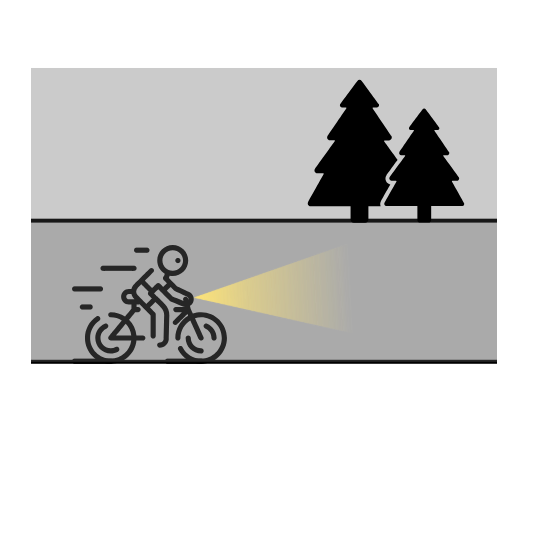
Light Up!Make sure you have a set of front and rear lights.This is especially important during times of low visibility — such as on cloudy or rainy days, dawn, dusk, or night. Remember, it's not just about seeing the road; it's also about making sure others can see you.
|
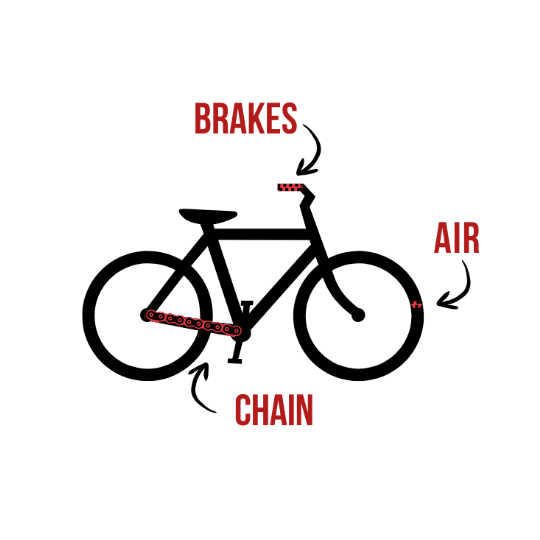
Make sure to ABCBefore riding, perform an ABC check –
This quick check not only helps ensure an enjoyable ride but also prevents unsafe conditions that could lead to accidents.
|

Go with the FlowRide with the flow of traffic, follow all road signs and signals, and stay in the bike lane or the drive lane – do not ride on the sidewalk.Differences in speed and limited space to maneuver are just two reasons why riding on sidewalks can endanger both cyclists and pedestrians. Riding with the flow of traffic makes you more visible to drivers and ensures you can follow traffic signals, such as stop lights (Triathlete). |